books
Lupus, You Odd Unnatural Thing
48 passages marked
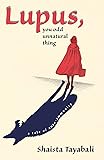
I have always believed in the purposefulness of books, particularly the ones we don’t know we are about to encounter for the first time. The ones that seem to be waiting for us.
I opened my first book of the new reading year. The End of Your Life Book Club by Will Schwalbe is a memoir by a son about the last year of his mother’s life, as she walks towards her death from pancreatic cancer. Mother and son hold each other’s hands through a series of books they read together in a book club they joined. A book club of two.
I write to know the wolf better. I write in an attempt to conquer fear. I write because I believe I am kintsukuroi, broken pottery joined by gold dust and lacquer: where the break joins, there is no seamless transition.
Writers never cease writing in their heads.
Lupus gives us two lives. The one we had before we fell ill/were diagnosed and the one forever after.
Memoir is the retelling of personal history drawn from memory.
A chronic illness patient must provide a memorised narrative of their history every single time they encounter a new doctor in or out of the emergency room. ‘Tell me your story, in your own words,’ the doctor will encourage you.
A patient must always be on guard, prepared to answer questions, when often all we want to do is curl into ourselves, shut down unnecessary avenues of energy expenditure and be quiet enough to heal.
‘In charge’ being the operative phrase because the patient is patently not in charge. To be a patient is to be the object of an action. The moment you are ‘admitted’ – an interesting word in itself, suggesting your truth has been confirmed by an authority that decides (admits) there is something wrong with you – you are simultaneously legitimised and treated as hospital property, evidenced by the plastic band snapped around your wrist. You have a hospital number and that is your identity – your relevant identity.
The theatricality of the courtroom is mirrored in the emergency room. Surgeries are called theatres because once upon a time they offered spectacles. Perhaps they still do.
The fact that I can empower my character-self in a novel, but can’t do it for myself in real life, breaks something in me and makes me equally determined to fix the broken pieces.
The word ‘patient’ derives from the root ‘to suffer’.
To escape the various stigmas, we are supposed to vociferously state that we are not our illnesses – an illness is a diagnosis and we are so much more than that.
I have little fear in acknowledging the presence of lupus everywhere that is recognisably and also invisibly me. I am attached to this reality without terror. But also, without possessiveness. I do not desire lupus. I did not invite it to stay. But it has staying power. And its address of residence is my body. I am its host. It hosts itself in me, an undesirable immunological reality.
Lupus is auto-immune. Instead of producing antibodies that attack pathogens (bacteria, viruses), a system that protects most human beings on an almost continual basis, my body makes auto-antibodies. Self-attacking soldiers. The most vital line of defence turns inwards and my body attacks itself.
According to Professor Laurent Arnaud from the National Reference Centre for Autoimmune Diseases of Strasbourg, France, the metaphorical wolf first arrives in the year 850 AD with a man named Eraclius, the twenty-fifth Bishop of Liège, who was very ill with ‘la loup’, so called ‘because it eats the flesh’. The first mentions of lupus in the early twelfth and late thirteenth centuries referred to a malignant ulceration destroying the nose or face, and particularly the lower limbs.
Why lupus? The disease mirrored the rapacity of a wolf attack. The Oxford English Dictionary references lupus in a text dated c.1590: ‘very hungry like unto a woolfe’, most likely quoting the Swiss physician, Paracelsus.
In the 1840s, the Viennese physician, Ferdinand von Hebra, made notes on a distinctive rash ‘mainly on the face, on the cheeks and nose in a distribution not dissimilar to a butterfly’. From wolf to butterfly in a few hundred years.
Later, érythémateux was Latinized to erythematosus and, since the condition affected various other parts of the body – heart, lungs, kidneys, joints, nervous system – ‘systemic’ prefixed ‘lupus erythematosus’.
the difference that makes all the difference – is that everyone has heard of cancer, fears or respects cancer, and no one fears or respects lupus.
Galloping myopia is what I have had since I was a child. Isn’t it interesting the way a word commonly used in conjunction with another word conjures a kind of romance where otherwise there would be none? Galloping makes me think of horses. Stallions roaming wild and free. Extraordinary landscapes blurring into beauty. Eyes failing to darkness because of galloping myopia – I struggle to find the beauty in that.
There is only so much ignoring you can do for visual discomfort, because most of our evasive techniques for pain are located in vision itself. Movies, books, walks in nature, cups of tea with a visiting friend, even lying in the dark, listening to music or a story.
To be a writer, you have to write. Words take time to form themselves. I am trying to write, trying to earn my place, but I struggle to keep faith when the words blur, when I lose my days to migraines.
The Vietnamese Zen Buddhist monk Thich Nhât Hanh calls this type of practice Toothache Meditation. When you have a toothache, you think there is nothing more cruel. You cannot escape it. You become the toothache. But, Thây asks, what about all the days when you didn’t have a toothache? We never even notice them. Toothache Meditation is for the days of no toothache – Dear Teeth, thank you for working well today, with no ache.
We are functioning imperfectly and chaotically because of an authority more powerful than any doctor. We contain a universe of anti-double stranded DNA. We produce immune complexes whose peculiar formations the medical world is still trying to perceive let alone successfully unravel.
Since we associate illness with death, we fear that illness will begin its theft by taking away pieces of the outer body. Hair,
Here is a good description of the pathogenesis of lupus: The disease is an immunologic disorder marked by the presence of circulating immune complexes. Active disease is associated with raised circulating immune complexes and reduced fractions of complement. Diagnostic tests: anti DNA antibodies, mitochondrial type V antibodies.
Thich Nhât Hanh, which begins, ‘I hold my face in my two hands/ to keep my loneliness warm… two hands preventing/ my soul from leaving in anger’.
A friend visited and did not like to see the tears in my eyes, my tiredness. ‘I am a river of sadness,’ I sighed. ‘Well, you can’t be,’ he said, sternly. ‘There’s no such thing. Rivers move and change and take things away with them and pick things up, like flowers and happiness. Write me a happy poem!’
Arm in arm with my big brother, down to a field of gold I never knew had existed all along, outside the ward. There were bees and butterflies. I wiggled my toes in the cool fresh grass, and unfurled my wings, a little, at last.
No human who wants to live should ever have to be given a drug that might cause death, but that would rule out almost every single drug prescribed for lupus.
Frida Kahlo was eighteen when a near fatal bus accident crushed her, breaking her spine, collarbone, ribs, shoulder, piercing her abdomen. For almost thirty years, she painted her beautiful and bloody reality. Then, a year before her death in 1954, gangrene set in, and doctors amputated her right leg below the knee. In her diary, Frida drew her feet and wrote, ‘Pies, para que los quiero, si tenga alas pa’ volar?’ ‘Feet, what do I need you for, when I have wings to fly?’
There are clocks everywhere, white circles of timekeeping in a place run by time, where people are destroyed by time.
There is always a voice calling, ‘Help! Help!’ It paces itself in the repetition of the word, drawing out the ‘he-ell’, the soft plosive ‘p’ seems only added for effect, until the word becomes whole, becomes a howl.
Clothes are removed from bodies and replaced by faded scraps someone decided to call ‘gowns’ – a cruel joke, for what resemblance do these shapeless, dignity erasing items bear to the long, floating dresses worn by wealthy women of earlier generations?
Names mean everything in India. Names give away your hiding place, reveal your religious identity to men ready to burn down your home. But names are unnecessary information in England, when your face, your skin, is enough of a calling card.
It is revolutionary in most of the old cultures to be an artist or sportswoman not because the culture does not support these professions, but because arts and sport offer the chance for visibility, for the old stories to be told in our mouths, on our tongues, and not by the appropriation of others.
Do you feel this is your home now? Or is India still your home? Home is where you are never asked this question.
This is not a book about being a warrior. This book is about resistance. Living is an act of resistance. Living past death and through a half-life into a full life is an act of resistance.
I don’t write for catharsis. I write to tell the truth of my life. I was here. I wrote. And I carried on living, just the same. With all those truths intact.
That if I died, I would go on existing in anecdote or the presence of a white butterfly, prancing on a summer’s day.
It isn’t death we fear. What we fear is the rapidity with which life closes over us.
The paradox at the heart of my life is this: I want. I have an appetite for fame, money, success, happiness, friends, soul mates and children. But I am slow. I learn slowly. I put life teachings into practice, slowly. It takes me years to move from one spot to another. From one room to another. From one house to another. I am lazy. Even as I write that, I think this: I am not lazy. I am happy.
To be an artist is to know suffering, but to know beauty and joy, more.
Dust in India cannot be swept away. It can be swept from here to there, but mostly it fluffs itself up in the air and lands daintily again by the sweeper’s feet, as though to suggest they would both be more comfortable if they could just accept what they are to each other. Dust provides the sweeper with a job. And the sweeper provides dust with excitement, a little flurry, a change of pace and place.
kintsugi philosophy made me think of my broken pieces joined not by stitches and scar tissue, but by the gold dust of love and friendship.
We are devoted to being here, on earth, united by our desire to not die.
‘The ego arranges the bad light to its own satisfaction’ Clive wrote in my poetry journal of that time, quoting himself from his first bestseller, Unreliable Memoirs.